
You know those stubborn white marks that appear around bathroom faucets, no matter how often you clean them? Or the chalky deposits inside your kettle that seem to return almost immediately after descaling? They’re familiar frustrations for households dealing with hard water.
While regular cleaning helps keep these deposits under control, it doesn’t address what’s causing them in the first place.
Homeowners looking to reduce hard water scale with softening can tackle the source of the problem by lowering the concentration of hardness minerals in their household water supply.
It’s a practical improvement that can make everyday maintenance less demanding while helping protect certain appliances. Before investing in a system, though, it’s worth understanding how softening works and what installation actually involves.
Why Hard Water Leaves Mineral Deposits Behind
Water naturally collects minerals as it travels through soil and rock formations. Calcium and magnesium are the primary minerals responsible for hardness.
When water evaporates or is heated, hardness minerals can form deposits commonly known as limescale.
These deposits are particularly noticeable around showerheads, faucets, kettles, and glass shower screens. They can also accumulate in less visible places, including certain plumbing components and water heaters.
Although hard water isn’t automatically unsafe to drink, its effects on household maintenance can be frustrating.
Soap may not lather as effectively, glassware can develop cloudy marks, and bathroom surfaces often require additional cleaning.
Rather than assuming hardness is responsible for every water-related problem, arrange appropriate testing. Knowing your actual hardness level makes choosing treatment equipment much easier.
Finding a Softening System That Makes Sense for Your Home
There’s certainly no shortage of products promising to address mineral buildup. The challenge is understanding which ones actually reduce hardness and which simply help manage its effects.
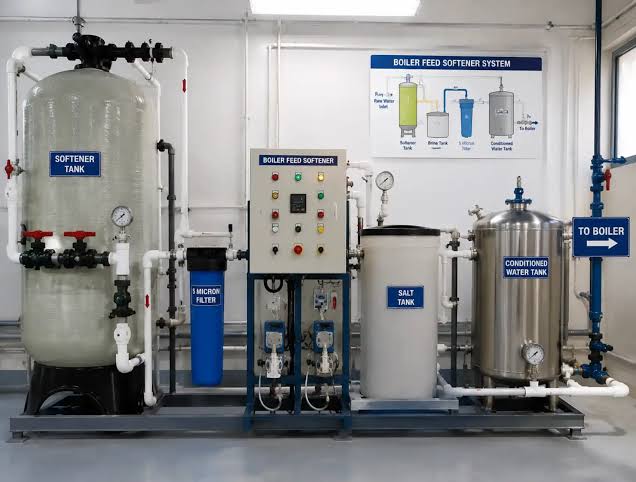
Traditional water softening solutions generally use ion exchange technology to remove calcium and magnesium ions from incoming water, replacing them with sodium or potassium ions.
Salt-free conditioning equipment works differently. Certain systems may help manage scale formation under suitable conditions without removing hardness minerals.
The distinction matters because these technologies don’t necessarily deliver identical results.
If you’re hoping to improve soap performance and reduce hardness-related residue, conventional softening may be the more appropriate choice.
Consider measured hardness, household consumption, available installation space, and ongoing maintenance costs before purchasing equipment.
A system that fits your household’s requirements will generally offer more practical value than one selected purely for its advertised features.
What Happens During a Water Softener Installation?
Having unfamiliar equipment connected to your home’s plumbing might sound complicated, but understanding the main stages can make the experience less intimidating.
The water softener installation process typically begins with evaluating the incoming water supply, identifying an appropriate equipment location, and confirming plumbing, drainage, and electrical requirements where applicable.
The softener is generally connected near the main water supply so that treated water can reach selected household fixtures.
An installer may also incorporate a bypass valve, allowing water to flow around the equipment during certain maintenance procedures.
Once the connections are completed, the system is configured according to measured hardness and anticipated household consumption.
Final checks should include inspecting plumbing connections, confirming regeneration settings, and verifying softening performance.
Discussing these details beforehand helps homeowners understand what to expect and how to operate their new equipment confidently.
Protecting Appliances From Future Limescale Buildup
Most people notice mineral deposits on visible surfaces first. However, what’s happening inside water-using appliances deserves attention as well.
Water heaters, dishwashers, and kettles may develop mineral accumulation over time. Scale on heating surfaces can interfere with heat transfer and potentially increase maintenance requirements.
Appropriate softening helps limit future mineral deposits, supporting more manageable appliance maintenance.
However, don’t expect a newly installed softener to immediately remove years of accumulated buildup.
Existing deposits may require separate cleaning or professional servicing, depending on the equipment’s condition.
Think of water softening as an investment in preventive maintenance rather than an instant repair for every appliance problem.
Making Everyday Household Cleaning More Manageable
One of the more appealing benefits of softened water is its influence on ordinary cleaning routines.
Soap generally lathers more readily when fewer hardness minerals are present. Bathroom fixtures may accumulate less mineral residue, and washing glassware can become less frustrating.
Laundry detergents may also work more effectively when used in quantities appropriate for softened water.
Interestingly, bathing in softened water can feel quite different at first. Some people notice a slightly slippery sensation that takes a little getting used to.
These changes might sound relatively minor, but their value becomes apparent when experienced repeatedly.
Spending less time fighting stubborn mineral deposits is certainly something most homeowners can appreciate.
Understanding the Maintenance Requirements Before Installation
Water softeners aren’t completely maintenance-free.
Conventional systems require periodic salt replenishment, regeneration, and occasional servicing. Following manufacturer recommendations helps maintain consistent treatment performance.
Ask about anticipated salt consumption, regeneration water usage, and replacement component costs before purchasing equipment.
It’s also worth discussing whether outdoor faucets should bypass treatment to avoid unnecessary softening.
For individuals following medically prescribed sodium restrictions, seeking advice about softened drinking water from an appropriate healthcare professional is sensible.
Remember that softening doesn’t reliably remove harmful microorganisms or every dissolved contaminant. Additional treatment may be necessary depending on your water quality.
A Practical Investment in Everyday Home Comfort
Addressing hard water doesn’t need to involve complicated equipment or unnecessarily expensive upgrades.
Begin with reliable testing, select appropriately sized equipment, and arrange professional installation that reflects your property’s requirements.
With consistent maintenance, suitable softening can help make household cleaning easier and reduce future mineral accumulation.
Sometimes, the best home improvements are surprisingly ordinary. Less time spent scrubbing faucets, fewer frustrating mineral deposits, and more manageable appliance maintenance can make everyday living just a little more enjoyable.