Water is one of those everyday essentials we barely notice—until it starts creating problems. You expect it to clean your dishes, rinse shampoo from your hair, brew a good cup of coffee, and keep your appliances running without a second thought. But if you’ve ever wondered why your faucets constantly collect white residue or why your towels never seem quite as soft as they should, your water may be telling a different story.
Millions of homes deal with hard water, yet many homeowners simply accept its effects as part of normal life. The truth is, mineral-rich water quietly influences everything from your plumbing to your laundry. Once you understand how it works, it’s much easier to decide whether improving your home’s water is worth the investment.
For many families, the answer becomes obvious surprisingly quickly.
Hard Water Is More Common Than Most People Think
Hard water develops naturally as groundwater passes through layers of limestone, chalk, and other mineral-rich rock. During that journey, it dissolves calcium and magnesium before eventually reaching homes through municipal systems or private wells.
Those minerals aren’t necessarily harmful to drink, but they change how water behaves throughout the house.
Soap doesn’t dissolve as efficiently. Mineral spots begin appearing on sinks and shower doors. Water heaters slowly lose efficiency, while plumbing fixtures require more frequent cleaning.
Because these changes happen gradually, homeowners often don’t realize how much hard water affects daily life until they experience softer water.
Everyday Clues Often Go Unnoticed
One of the interesting things about hard water is that it rarely announces itself with one dramatic problem.
Instead, you notice dozens of little inconveniences.
Shampoo takes longer to rinse away. Dishes come out of the dishwasher with cloudy spots. White residue keeps returning around faucets. Your coffee maker needs descaling more often than expected, and soap never seems to produce the rich lather shown in advertisements.
Individually, these seem minor.
Together, they quietly shape how your home feels every single day.
Why a Water Softener Makes Such a Difference
When testing confirms excessive hardness, installing a water softener often provides one of the most noticeable improvements homeowners experience.
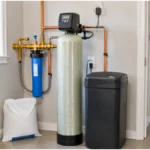
Rather than filtering water in the traditional sense, a softener reduces calcium and magnesium before those minerals circulate through the home’s plumbing.
The results extend well beyond drinking water.
Soap rinses away more easily, skin often feels less dry after showers, and laundry becomes noticeably softer. Water heaters, dishwashers, and washing machines also benefit because they’re no longer constantly fighting mineral deposits.
It’s one of those upgrades people tend to appreciate every single day without consciously thinking about it.
Looking Beyond Individual Fixtures
Some homeowners begin by treating water at a single faucet, especially in the kitchen.
That certainly improves drinking water, but it doesn’t solve problems affecting showers, bathrooms, laundry rooms, or expensive appliances connected throughout the house.
That’s where whole home water softener systems become especially valuable.
By treating water as it enters the home, every faucet, appliance, and plumbing fixture receives softened water. The entire plumbing system benefits rather than only one location.
For households experiencing widespread mineral issues, this comprehensive approach often provides the greatest long-term value.
The Hidden Cost of Mineral Deposits
Hard water doesn’t just leave visible stains.
Every time mineral-rich water flows through pipes or heating equipment, tiny amounts of calcium and magnesium remain behind. Over months and years, these deposits slowly accumulate inside plumbing systems and household appliances.
Water heaters become less efficient because heating elements develop insulating layers of scale. Showerheads gradually clog, and dishwashers may require more maintenance than expected.
Many homeowners attribute these problems to aging equipment when, in reality, their water has been quietly contributing to the wear all along.
Understanding Hard Water Buildup
The white residue left behind after water evaporates is commonly known as hard water buildup.
You’ll usually notice it first around faucets, shower doors, sinks, kettles, coffee makers, and glassware. While it may appear harmless, those same mineral deposits often develop inside places you can’t see, including plumbing pipes and water heaters.
Cleaning visible buildup can be frustrating enough.
Preventing new deposits from forming is usually a far more satisfying long-term solution than repeatedly scrubbing the same surfaces.
Better Water Benefits More Than Cleaning
One pleasant surprise for many homeowners is discovering how many daily routines improve once water hardness is reduced.
Coffee and tea often taste cleaner because excess minerals no longer influence flavor extraction. Clothes maintain their softness, dishes appear clearer, and soaps perform much closer to the way they’re designed.
Even simple tasks like washing your hands or rinsing fresh vegetables become a little more enjoyable.
These aren’t dramatic lifestyle changes—but they’re meaningful improvements that quietly accumulate over time.
Testing Before Making Decisions
Before investing in any water treatment equipment, it’s always wise to begin with professional testing.
A comprehensive water analysis measures hardness, mineral content, pH balance, iron, manganese, chlorine levels, and other characteristics unique to your home’s water.
Testing confirms whether hardness truly is the issue and helps determine the most appropriate treatment solution.
Making decisions based on accurate information nearly always produces better long-term results than relying on assumptions.
Better Water Is an Investment in Everyday Comfort
Home improvements are often judged by how frequently they make life easier.
Few upgrades work harder behind the scenes than improving household water. Softer laundry, cleaner fixtures, reduced appliance wear, easier cleaning, and more comfortable showers become part of daily life without requiring extra effort.
Those benefits continue year after year, quietly protecting your plumbing while improving the comfort of your home.
Small Changes Today Can Make a Big Difference Tomorrow
Water is something every household depends on from morning until night, yet it’s easy to overlook until problems begin appearing.
If mineral stains seem impossible to control, your appliances require constant maintenance, or soap never quite performs the way it should, your water may deserve a closer look.
Understanding your home’s water and choosing the right solution isn’t about chasing perfection. It’s about creating a home that’s easier to maintain, more comfortable to live in, and better prepared for the years ahead.
Sometimes the smartest investment isn’t the one everyone notices. It’s the one quietly improving every single day—one drop at a time.