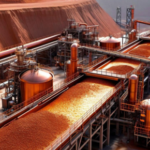
India is entering a new phase in its industrial and sustainability journey, one where clean manufacturing meets critical resource demand. The emergence of India’s first green copper cathode plant marks a significant milestone, not just for the copper industry, but for the broader metal recycling ecosystem.
As demand for copper continues to surge across infrastructure, electrification, and clean energy, this shift towards sustainable copper cathode manufacturing signals a deeper transformation in how India produces, consumes, and recycles metals.
Why Copper Cathodes Matter More Than Ever
Copper cathodes are the purest form of copper (typically 99.99%+ purity) and serve as the base material for manufacturing wires, rods, busbars, and other components used across industries.
From power grids and construction to EVs and renewable energy systems, copper is indispensable. This makes copper cathode manufacturing a strategic capability for any growing economy.
Traditionally, copper production has been energy-intensive and dependent on mining. However, with rising environmental concerns and supply constraints, the focus is now shifting towards copper recycling as a sustainable alternative.
The Shift Towards Green Copper Manufacturing
The concept of a green copper cathode plant introduces a new benchmark for the industry. It brings together clean energy, advanced processing, and precision manufacturing to create a more sustainable production model.
Key elements of this shift include:
- Integration of renewable energy into operations
- Advanced smelting and refining technologies
- Automated systems ensuring consistency and quality
- Compliance with global manufacturing standards
This approach significantly reduces the carbon footprint compared to conventional production methods while ensuring high-quality output.
By integrating sustainability into copper cathode manufacturing, India is aligning itself with global ESG standards and strengthening its position in the metal recycling value chain.
The Role of Copper Recycling in This Transformation
A key driver behind green copper production is the increasing reliance on copper recycling plant ecosystems.
Recycled copper offers several advantages:
- Uses up to 85% less energy than primary production
- Reduces carbon emissions significantly
- Retains the same properties as virgin copper
- Ensures long-term resource availability
India already has a strong base of copper scrap generation, from electrical wiring, industrial waste, e-waste, and construction debris.
The integration of recycling with refining and cathode production creates a closed-loop system, where scrap is transformed into high-purity copper cathodes and reintroduced into manufacturing.
Inside the Green Copper Ecosystem
The new-age copper manufacturing model follows an integrated approach:
1. Sourcing Copper Scrap:High-quality copper scrap is sourced from domestic and global markets, ensuring consistent feedstock for production.
2. Smelting and Refining: Advanced processes convert scrap into refined copper, removing impurities and achieving ultra-high purity levels.
3. Electrolytic Cathode Production:Using electrolysis, refined copper is transformed into electrolytic copper cathodes (Cu 99.996%), meeting global benchmarks.
4. Fabrication and Value Addition:Cathodes are further processed into rods, busbars, strips, and other high-performance products used across industries.
Jain Green Technologies: Powering the Copper Revolution
At the center of this transformation is Jain Green Technologies – a new-age venture focused on clean, efficient, and precision-driven copper manufacturing.
Backed by a legacy of over 75 years in metal manufacturing, it brings together:
- End-to-end capabilities: Smelting → Refining → Fabrication → Finishing
- State-of-the-art facilities with NABL-accredited laboratories
- Advanced plating and coating technologies
- Automated process control for precision and consistency
- Global presence across 20+ countries
With world-class infrastructure and 100% renewable energy integration, Jain Green Technologies is setting new benchmarks for copper cathode manufacturing in India.
What This Means for India’s Metal Ecosystem
The impact of this development goes far beyond a single plant.
- Strengthening Domestic Supply Chains: India can reduce dependence on imported refined copper by building strong internal capabilities.
- Boosting the Recycling Economy: The integration of copper recycling plant infrastructure with cathode production creates higher demand for organised scrap collection and processing.
- Supporting Clean Energy Transition: Copper is essential for EVs, solar, and wind energy, making sustainable production critical for India’s climate goals.
- Enhancing Global Competitiveness: With high-quality, ESG-compliant production, India can position itself as a reliable supplier in global markets.
By building a strong, circular ecosystem that connects copper scrap, recycling infrastructure, and high-quality production, India is positioning itself as a global leader in sustainable metal manufacturing.